
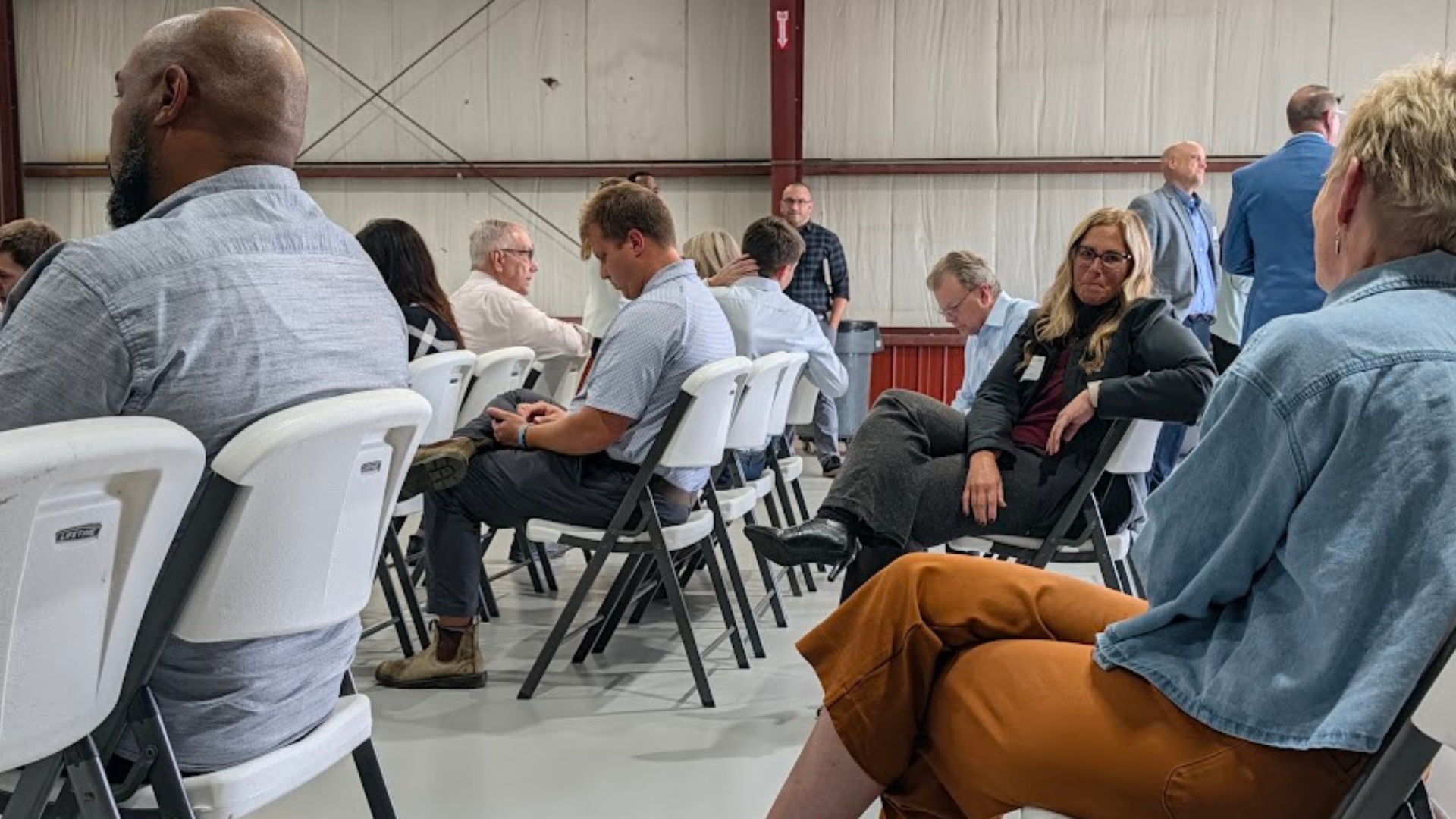
GMED’s Beyond Boundaries event highlighted the connections between regional infrastructure, business growth, and the technology we depend on every day.
By Brent A. Raeth, Managing Partner of CatchMark
Most of us begin the workday assuming the essentials will work. The lights will turn on. Water will flow. Employees will arrive. Our internet connection will carry the messages, transactions, and information that keep business moving.
Behind those everyday expectations are years of planning, investment, maintenance, and cooperation. When that work is done well, it is easy to overlook. When something fails, its importance becomes immediately clear.
That reality was at the center of Greater Muskegon Economic Development’s Beyond Boundaries: Infrastructure for Opportunity event at the Muskegon County Airport. The discussion brought together perspectives from energy, engineering, and regional planning, with a message that applies to every organization in our community: our ability to grow depends on the foundations we build and maintain.

At CatchMark Technologies, that connection is especially meaningful. Every technology initiative depends on infrastructure, including systems well beyond the walls of a business.
GMED deserves recognition for creating opportunities to explore those connections. Its work includes helping businesses with expansion, site planning, infrastructure development, financing resources, and coordination with local and state government. Those services help businesses navigate decisions that can determine whether an opportunity moves forward. Learn more about GMED’s work.
Events like Beyond Boundaries put that mission into practice. Business owners, utilities, engineers, and public leaders each see a different part of a project. Bringing them together helps people understand the dependencies, constraints, and possibilities they might otherwise miss.
The airport itself reinforced the point. During the opening remarks, county representatives described its role in connecting businesses with customers, suppliers, technical teams, and investment. They also discussed improvements and future planning aimed at strengthening that role. The setting made the conversation tangible: infrastructure helps determine how easily people and opportunities can reach our community.

That matters to everyone. Roads connect employees to work and families to services. Water and wastewater systems support homes, schools, healthcare, and manufacturing. Reliable energy supports everything from a neighborhood business to a production facility. These systems shape daily life as well as economic opportunity.
For technology, those dependencies are particularly direct. Cloud applications still rely on physical data centers, electricity, and communications networks. An online meeting needs a working connection. A manufacturing system needs dependable power and networking. An organization adopting artificial intelligence needs reliable access to its tools and information.
Moving more work online makes the quality of the underlying infrastructure increasingly important. A business can invest in excellent software and still struggle if its connectivity is unreliable or its network cannot support the workload.
One of the panel’s most useful lessons was the value of planning before a need becomes urgent. Panelists described how coordinating utility work with road projects can avoid paying to disturb and restore the same road twice. They also discussed designing infrastructure with room for future growth, reducing the need for expensive changes later.

The same principle applies inside a business. Planning cabling, wireless coverage, equipment space, and power needs before a renovation can prevent avoidable rework. Discussing an expansion with technology partners early helps align connectivity, security, and capacity with the opening date. Building a replacement plan for aging equipment makes costs and disruptions easier to manage.
The discussion also addressed a tension familiar to anyone in technology: how do you plan decades ahead when change happens so quickly? The panelists emphasized that long-term plans must be revisited and adjusted. Infrastructure has a long useful life, but the assumptions guiding investment will change.
That is a valuable lesson for business leaders. A technology plan should provide direction while allowing room to adapt. Knowing what you own, where the weaknesses are, and what future demands may look like gives you a better starting point for each decision.
At CatchMark, we also see resilience and cybersecurity as essential parts of that planning. Reliable operations require attention to outages, equipment failures, and security incidents. Backup connectivity, appropriate power protection, tested recovery procedures, and security controls help organizations prepare for disruptions. The right combination depends on what the business needs to keep operating and how much interruption it can tolerate.
These conversations belong alongside discussions about growth, staffing, facilities, and customer service. Technology decisions affect all of them.
Thank you to GMED, the panelists, and the Muskegon County Airport for bringing this conversation to the business community. The willingness to share expertise, discuss constraints, and plan together is an asset to our region.
At CatchMark, our purpose is to help people and solve problems. Strong infrastructure makes that work possible at every level. As Muskegon prepares for its next opportunities, the investments and relationships we build today will shape what our businesses and communities can accomplish tomorrow.